

At a glance
Two approaches. Different everyday fits.
Compare the practical differences before choosing the product type that fits your routine.
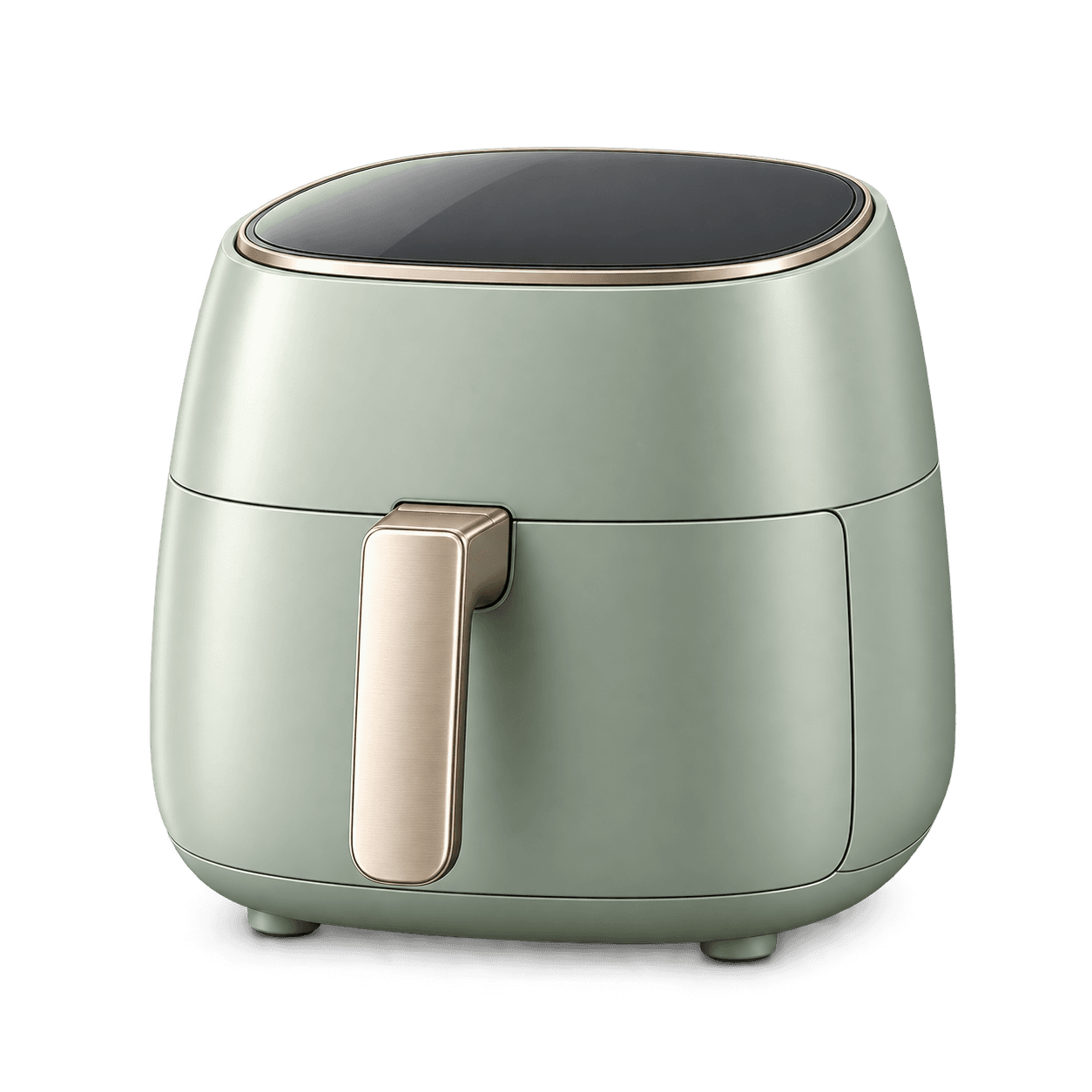
Single basket
A straightforward option for everyday meals, with one cooking zone and a simpler layout.
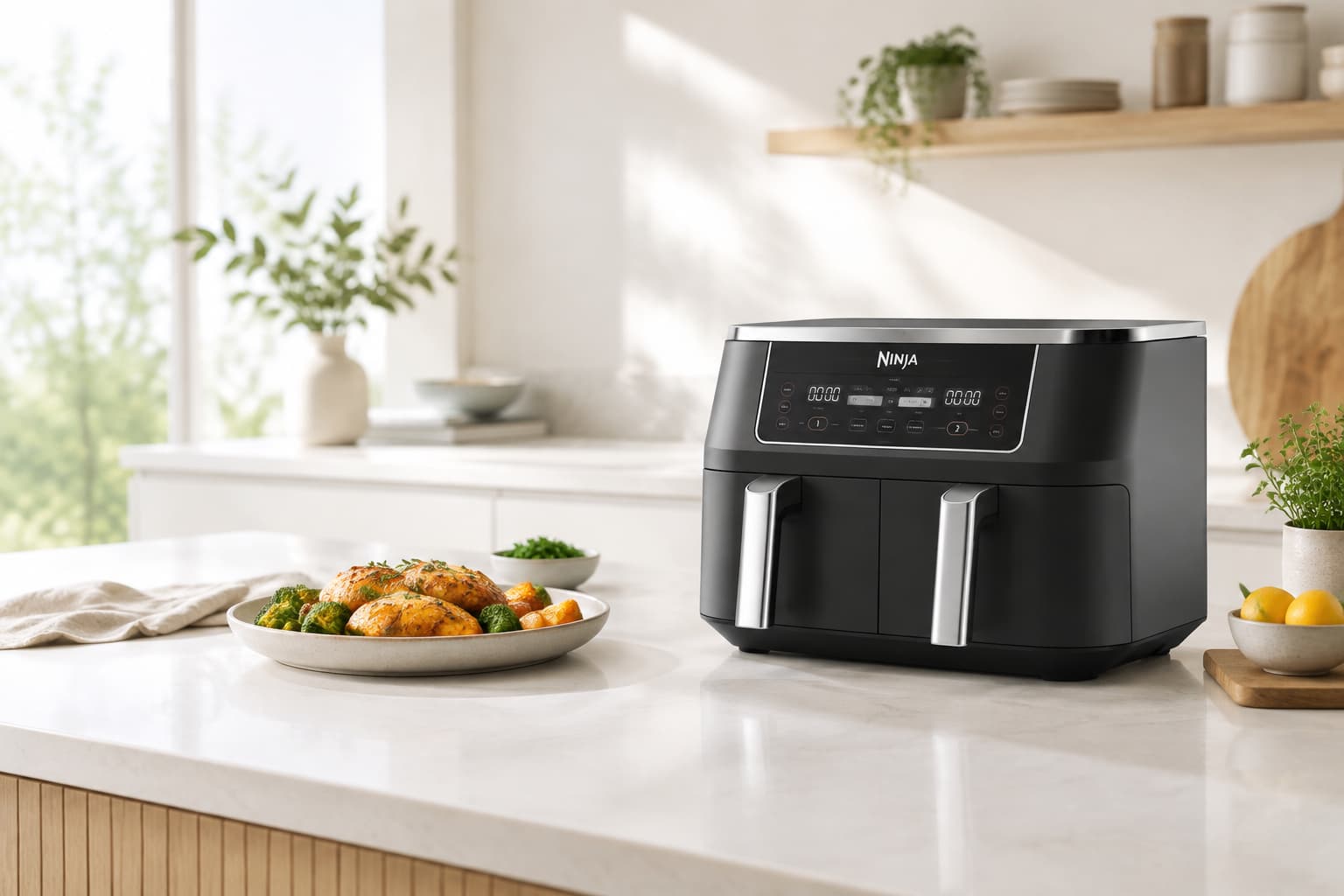
Dual basket
Two separate cooking spaces for households that often prepare different foods at once.
At a glance
Single-basket and dual-basket air fryers solve different routine problems. A single basket keeps the appliance and process simple. A dual-basket layout adds a second cooking zone, which can help when two foods need different timing or temperatures. Neither format is automatically better. Start with the meals you repeat, the counter space you have, and how much flexibility you actually use.
Counter space and capacity
A dual-basket model can offer more total cooking space, but its footprint may take more room on the counter. A single basket can be easier to store and may be enough for one food or a smaller meal. Do not treat a capacity number as a promise about every meal. Basket shape, usable depth, and the food you cook affect how much fits comfortably. Check the published external dimensions as well as the stated capacity.
Cooking different foods
A single basket works well when you cook one main item or are comfortable preparing parts of a meal in turns. With two baskets, you may be able to cook two foods at different settings, depending on the model’s controls and program options. That flexibility can be useful for family meals, but it also adds decisions and parts. Verify whether the exact appliance supports the timing and matching features you expect rather than assuming they are standard.
Cleaning and everyday upkeep
Cleaning is partly about the number of parts and partly about the manufacturer’s instructions. A single-basket machine has fewer components to wash; a dual-basket design may make separate foods easier to manage but can add baskets, trays, or dividers. Check the product manual for the exact removable parts, coating-care guidance, and dishwasher-safe claims before you decide.
Which fits your routine?
Choose a single basket if simple meals, smaller counter space, and an uncomplicated cleanup routine matter most. Consider dual baskets if your household regularly cooks two foods together and you have room for the larger appliance. The right choice is the one that matches your recurring meal pattern rather than the one with the longest feature list.
| What to consider | Why it matters |
|---|---|
| Counter space | Measure the appliance footprint, clearance, and storage space before choosing a larger layout. |
| Batch planning | One basket suits a simpler sequence; two baskets can help when two components need to finish near the same time. |
| Different foods | Separate zones can be useful for different foods, but verify the exact control options and timing features. |
| Cleaning | More removable parts can mean more flexibility and more cleanup. Follow the exact care instructions. |
| Controls | Confirm presets, temperature range, synchronization features, and accessible controls on the exact model. |
Our takeaway
- Measure your counter and storage space.
- List the meals you most often cook together.
- Verify exact capacity, controls, cleaning instructions, and warranty before purchase.
Sources & how this guide was prepared
General decision framework. Exact capacity, programs, dishwasher-safe claims, electrical requirements, and warranty terms vary by model; verify them in the manufacturer documentation before purchase.